

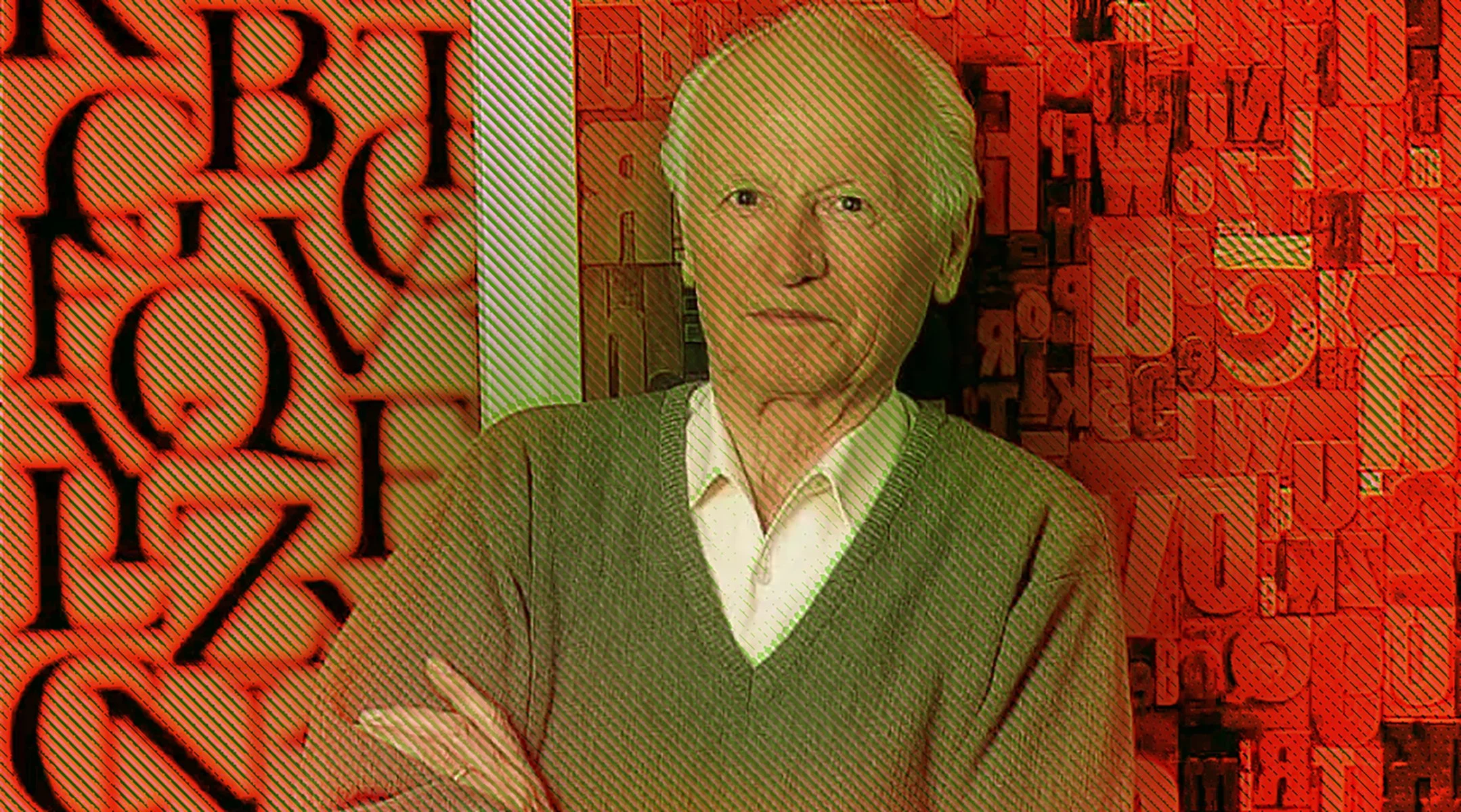

Hermann Zapf:
The Architect of the Digital Alphabet
Hermann Zapf (1918–2015) wasn't just a designer; he was a typographic mastermind. If you’ve ever admired the clean elegance of Palatino, the stone-carved soul of Optima, or the rhythmic dance of Zapfino, you’ve seen his hand at work. With a career spanning seven decades, Zapf bridged the gap between the ancient scribe and the modern coder, proving that a broad-edged pen and a microprocessor aren't enemies—they are partners in the art of beautiful writing.
From the Pen to the Pixel
Zapf was a rare visionary who refused to let the "machine" dictate the rules. While other designers feared the jump from metal type to digital bits, Zapf leaned in. He treated the alphabet like a structural engineer, designing letterforms that felt as natural on a 2026 retina display as they did on a 20th-century printing press. He understood that while our tools change, the structural integrity of a page is timeless.
The Hz-Program: Killing the "River"
But Zapf’s greatest gift to us wasn't just a font—it was a revolution in logic. In the late 80s, he developed the Hz-program (named for his initials), a groundbreaking hit-squad for "rivers."
You know the problem: those ugly vertical gaps of white space that rip through a block of justified text. Before Zapf, computers were "dumb"—they only adjusted the space between words. Zapf changed the game by introducing Multi-Line Composition.
The Hz "Secret Sauce"
The Hz-method uses three surgical micro-adjustments to achieve a perfect "typographic gray":
Word Spacing: Precision control of the "glue" between words.
Letter Spacing: Subtle kerning across the entire paragraph.
Glyph Scaling (The Genius Move): Zapf allowed the computer to condense or expand the actual letterforms by a nearly invisible 1% or 2%.
It’s the secret to a perfect fit. The human eye can't see a 1% stretch, but it can see the lack of rivers. It’s why your text feels balanced, rhythmic, and professional.
The Legacy in Your Hands
Today, Zapf’s brain is literally inside your computer. Every time you toggle the Adobe Paragraph Composer in Illustrator or InDesign, you are using the Hz-engine. At TYPEBURG, we don't just "type"—we build. And by mastering the Hz-method, you’re continuing the legacy of a man who turned the alphabet into architecture.
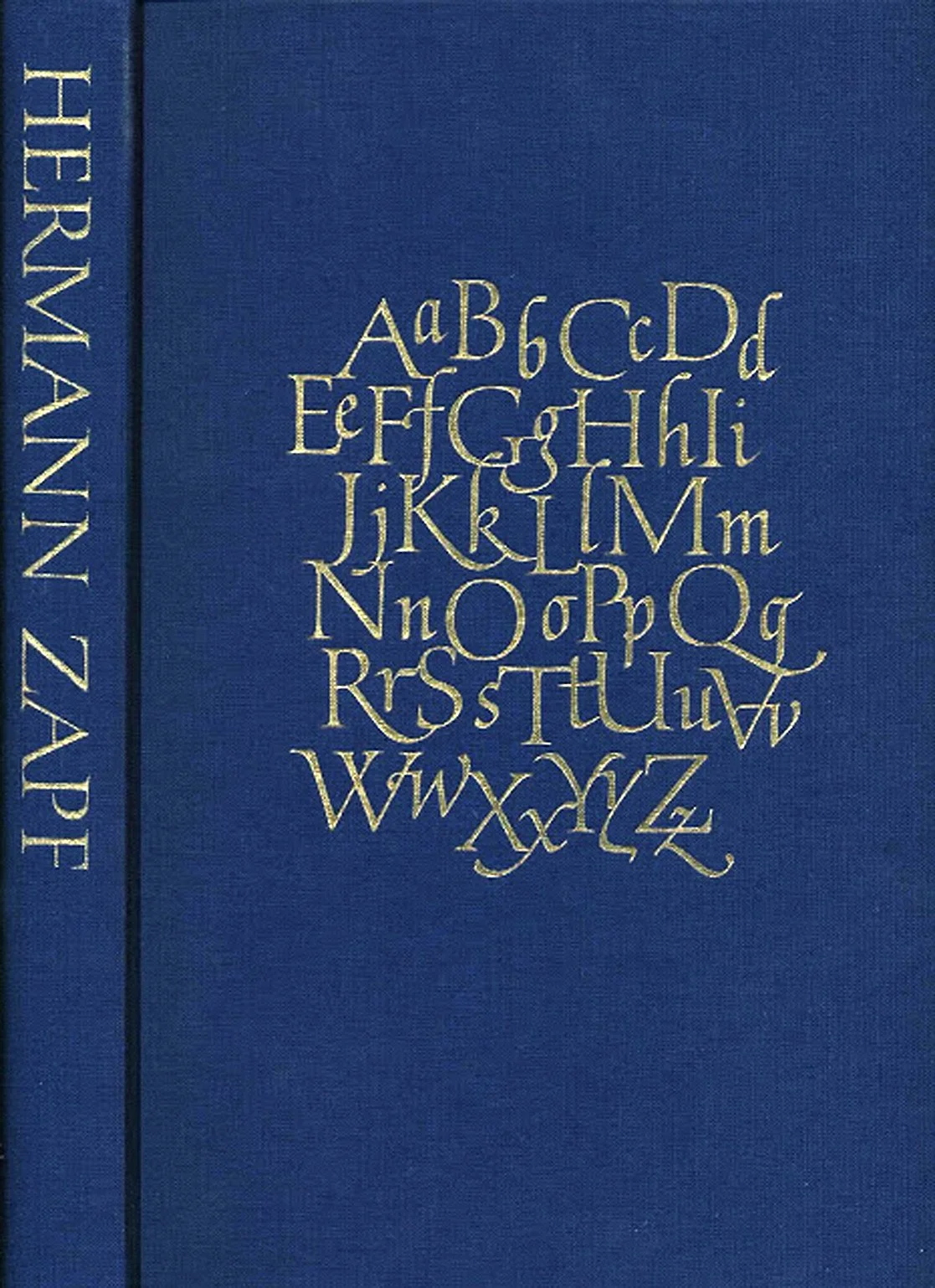
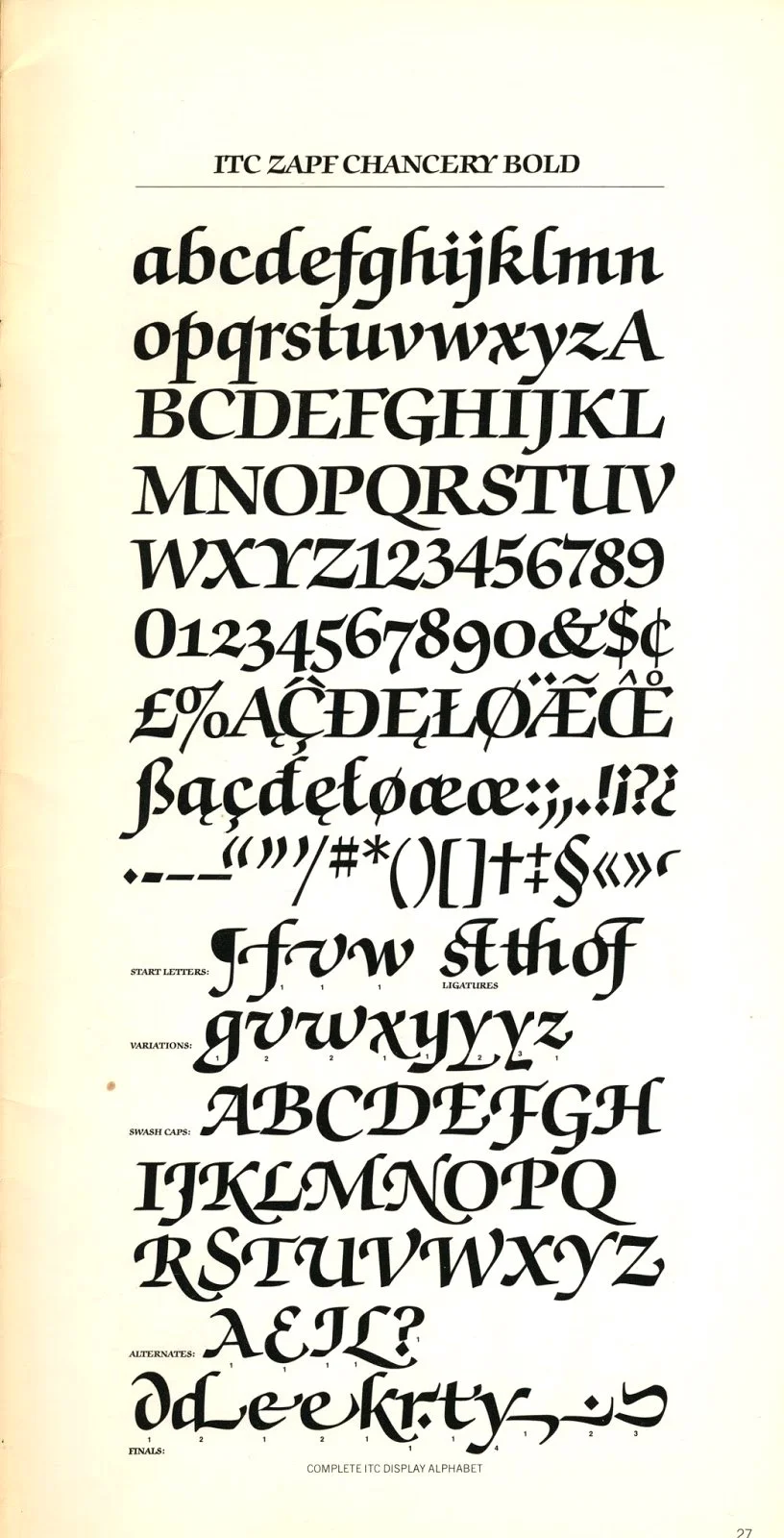
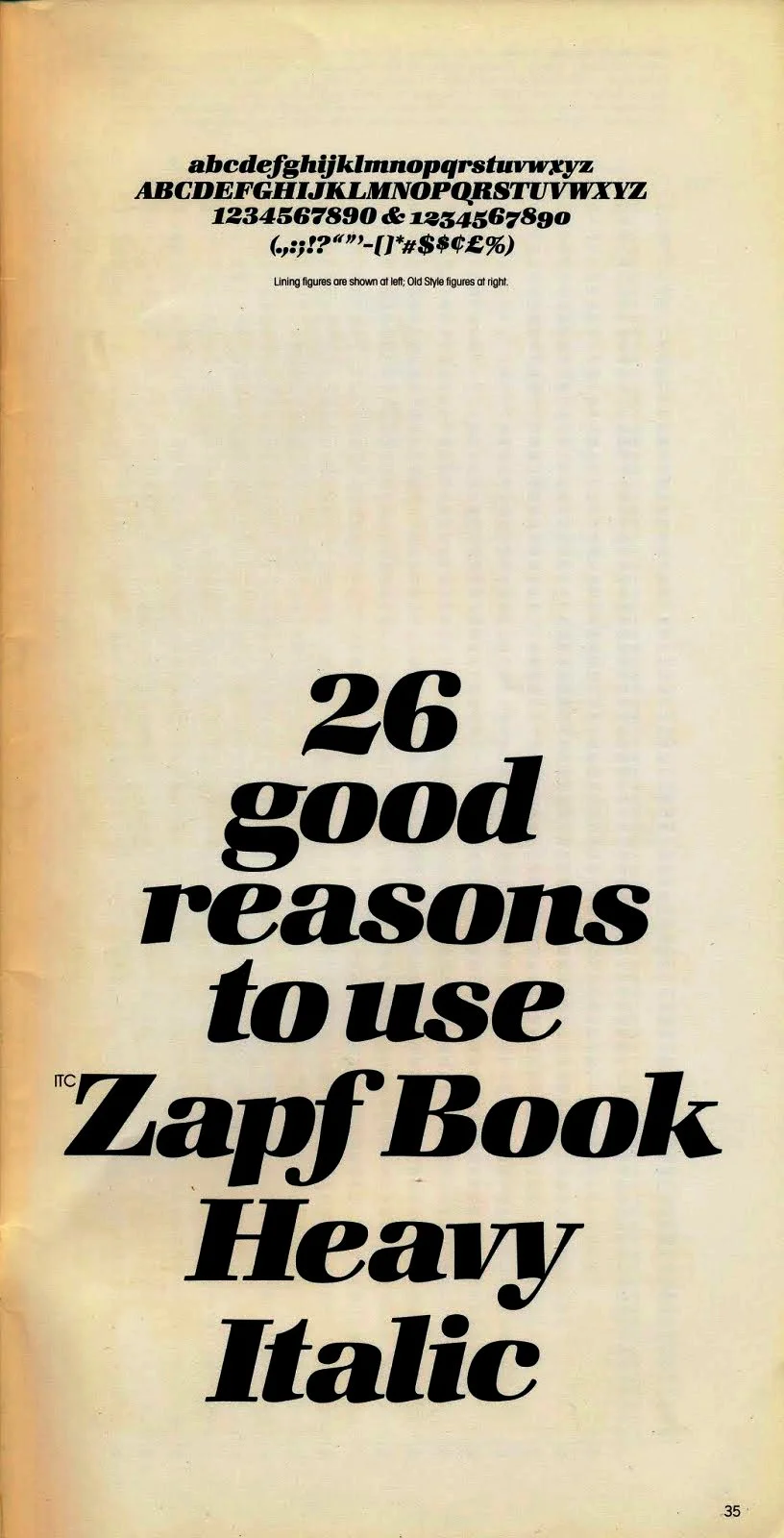
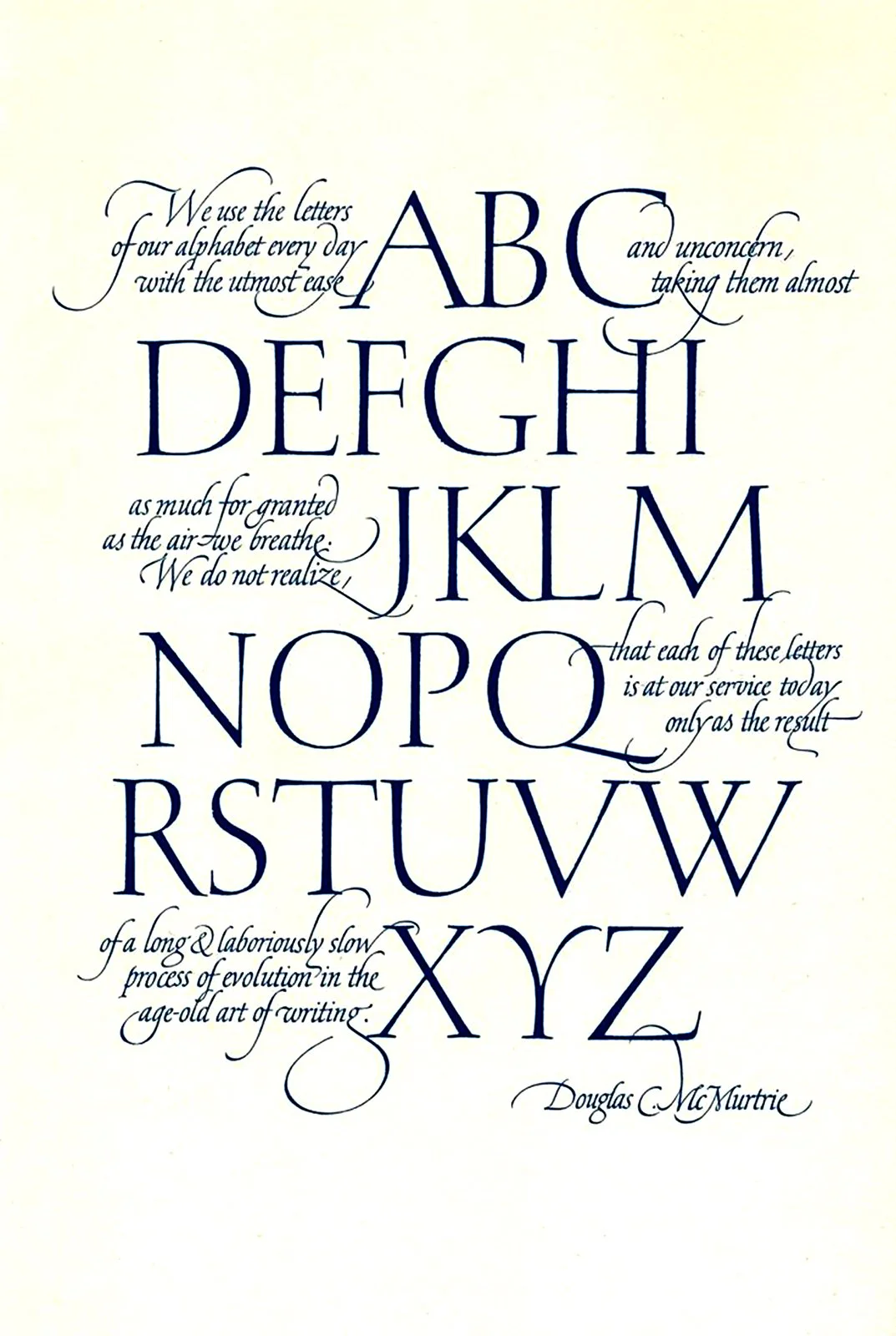
Selected pages from the International Typeface Corporation specimen booklet for ITC Zapf Book,
ITC Zapf International, ITC Zapf Chancery and ITC Zapf Dingbats.